Sep 18, 2026Pet Care Guides
How to Choose a Dog Harness: Material and Fit
Nylon or neoprene, padded or webbing? A practical guide to harness materials, fit checks, and the comfort problems owners run into most.
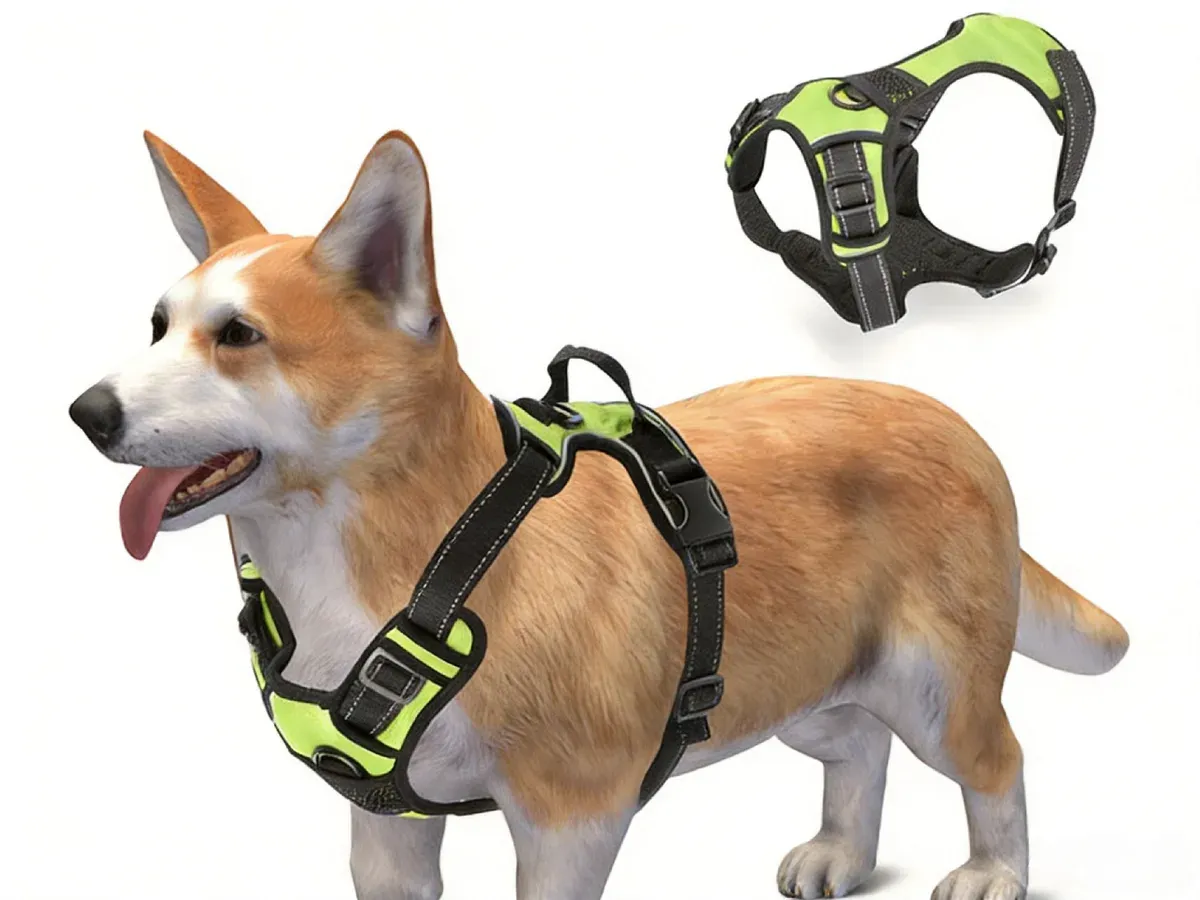
A harness spreads pulling force across the chest instead of the throat. Vets point out that dogs who pull against a collar risk tracheal collapse and neck strain, which is why harnesses are the standard choice for flat-faced breeds and strong pullers. But not every harness suits every dog, and the material matters as much as the shape.
The three materials you will see
Nylon webbing is the workhorse. It is strong, inexpensive, and easy to wipe clean, which is why most everyday harnesses use it. The trade-off is stiffness: thin nylon edges can rub under the front legs on a dog that pulls hard.
Neoprene and padded mesh add a soft layer between the webbing and the coat. This is the fix for chafing and for dogs with thin or short coats. Padding also spreads load across a wider area, so the same pull feels lighter.
Rope and chain are for specialised use, not everyday walking. They concentrate pressure and are harder to clean.
Fit: the part owners get wrong most often
The most common owner complaint is not material, it is sizing. A harness that is too loose lets a dog back out of it; too tight and it restricts the shoulder. Two checks settle it: you should fit two fingers flat under every strap, and the chest panel should sit behind the shoulder blade, not over it.
Measure the widest part of the ribcage, not the neck. Girth is what the size chart is built on, and a neck measurement produces a harness that sits too far forward.
Hardware and the escape artist
Look for load-tested buckles and metal D-rings. Plastic clips fail first on strong dogs, usually at the point where the webbing meets the buckle.
Dogs who routinely slip collars often do the same with a poorly shaped harness. A harness with a third strap, or a front-clip ring, gives more security and also discourages pulling because it turns the dog gently toward you.
What to ask a supplier
For wholesale buyers, three questions separate a good harness from a return: what is the webbing denier, is the padding closed-cell (it does not soak up water), and has the buckle been pull-tested. Ask for the girth range in centimetres for each size, not just S/M/L.
Owners rarely return a harness because of colour. They return it because it rubbed, slipped, or the buckle failed.