OEM/ODM
MOQ and Your First Order: Launching a Pet Range Without Tying Up Your Cash
Why factories set minimums, what an oversized first order really costs you, and the five terms worth negotiating before you commit to production.

Every new pet brand runs into the same wall. The catalogue looks great, the designs are ready — and then the factory quotes a minimum order of several thousand pieces per style. For a young brand with five or ten SKUs in the plan, that single number decides whether the launch happens this quarter or not at all.
Where minimums come from
Minimums are not arbitrary. Every style carries setup costs before the first unit is produced: moulds and fixtures, material batching, line changeover, and quality sampling. Spreading those costs across more units brings the price per piece down — which is why a 5,000-piece run prices far better than a 500-piece one, and why factories push volume.
The minimum is simply the point where the unit price still works for both sides. The problem is not that minimums exist. It is that the wrong minimum, on the wrong style, transfers all the risk to the buyer.
What an oversized first order really costs
Multiply an MOQ by your SKU count and the maths gets uncomfortable fast. Ten styles at a few thousand pieces each locks up cash in goods that have not earned a single sale yet.
And when a style does not move, the costs stack up on the buyer's side of the table: warehouse space month after month, capital that cannot fund marketing or new designs, and eventually markdowns or write-downs on dead stock. The factory was paid on delivery. Everything after that is the buyer's problem.
That is the real price of a first order sized by someone else's spreadsheet.
Five terms to negotiate before you commit
Before comparing unit prices, compare order terms. These five are worth more than a small discount:
- A low entry MOQ. Many buyers aim for 100–500 pieces per style on a first run. It will not be the best unit price — and it should not be. Its job is to test the market, not to win a price war.
- Mixed orders. Being able to combine styles — or several categories — inside one order line turns five separate minimums into one practical order.
- Trial orders. A deliberate small first run on one or two styles, with sampling before it, tells you what the market thinks before the warehouse finds out.
- Tiered pricing. A clear price ladder — better price at 1,000, better again at 3,000 — rewards growth instead of punishing the start.
- Restocking against real sales. The first order is a question, not an answer. A factory that treats reorders as the normal rhythm — replenishing what actually sells — is a partner. One that only wants one big deposit is a vendor.
How we set minimums
Our entry MOQs start from 500 pieces per category — some categories sit above 1,000 where tooling and materials cost more — and sampling always comes before any commitment, so the decision is made on a physical sample, not a rendering.
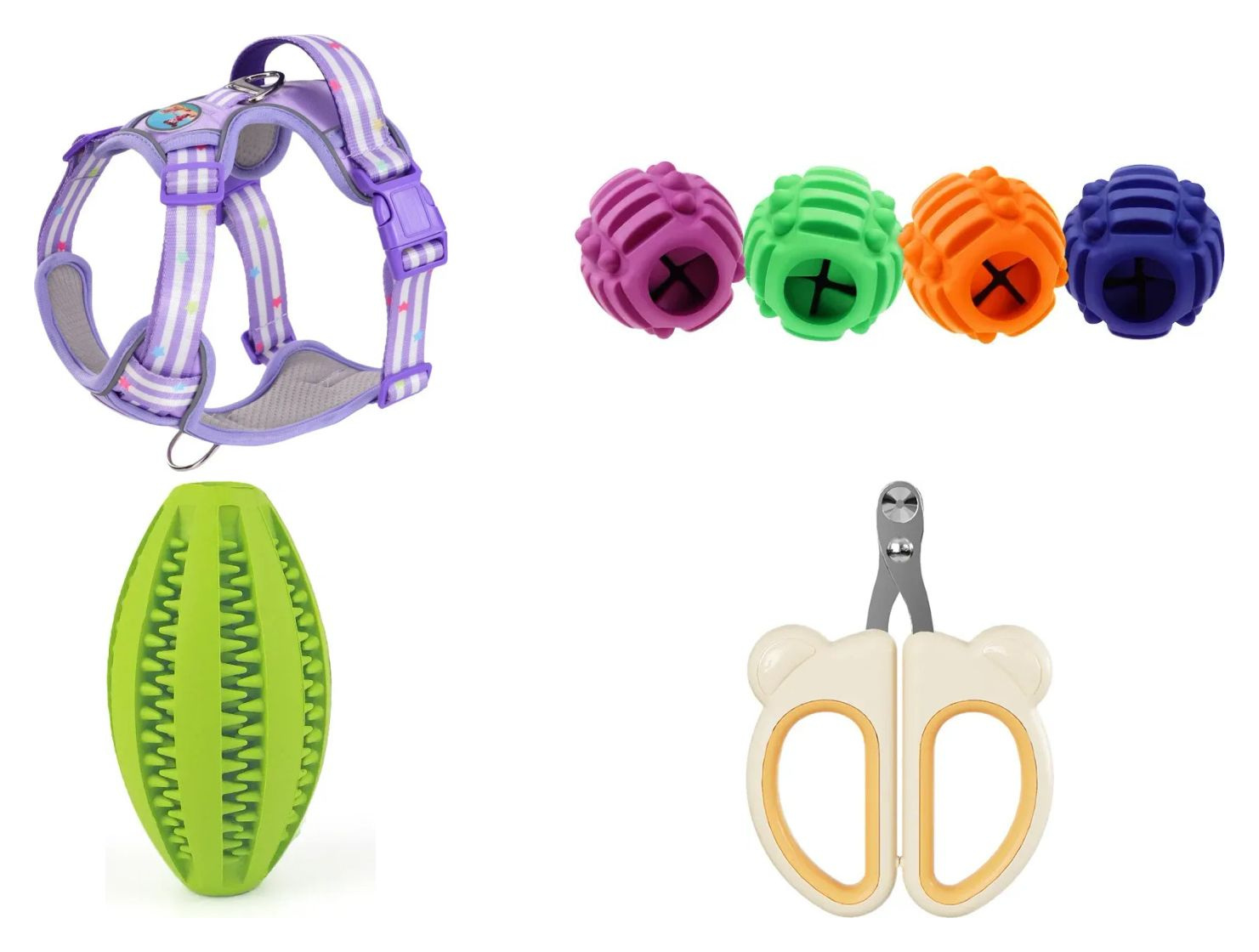
Because we run nine categories on one production line — harnesses, toys, travel carriers, apparel, feeding, grooming, training, clean-up and water bottles — a first order can mix categories instead of multiplying them. Simple packaging design and printing runs in about 15–20 days, so a small first order does not mean a slow one, and every wholesale enquiry gets a quote within one business day.
Start with what the market can teach you. Reorder against what it actually buys.
For buyers
Before you sign a first order, ask the factory five questions: What is the true per-style minimum, after tooling? Can styles or categories be mixed within one order? What does a trial run look like, and what does sampling cost? Is there a published price ladder for reorders? And how fast can a reorder turn around once a style proves itself?
The answers tell you more about the next two years of your brand than the quote on top of the email.